
A gardener for your garden beds in Logan, Utah
RedBud Plant Care is a gardener in Logan, Utah, and does garden bed maintenance for garden and flower beds across Cache Valley through the growing season: weeding, fresh mulch, cutting back spent growth and watering, with everything we pull or cut hauled away.
What a maintenance visit covers
Weeding
Weeds pulled by the root while they are small, before they flower and seed the bed for next year.
Mulch
A fresh layer where it has worn thin. It holds water in the soil through a dry summer and keeps the next weeds down.
Tidying
Spent flowers and dead stems cut back, so the plants put their effort into new growth and the bed looks cared for.
Watering while you're away
Beds watered while you travel. One client's review on this page says the yard looked better than if she had been home.
An eye on every plant
While we work, we look at how each plant is doing. If one is yellowing, wilting or crowded, we tell you what we see and what would help.
Nothing left behind
Weeds, stems and clippings leave with us. You won't find a pile on the lawn or a bag by the curb.
Who this is for
Garden bed maintenance is for people who want good-looking beds and don't have the hours to keep up with them. Maybe you bought a house with beds the last owner planted, and you can't tell the plants from the weeds yet. Maybe you travel in summer and come home to a bed that took over while you were gone.
Maybe you have the time and your back or knees say otherwise. Or you would rather spend your weekends enjoying the yard. Whatever the reason, the beds get looked after and you get your time back.
How it works
It starts with a call, a text or the quote form. Tell us roughly what the beds look like and what you want from them.
Then we come out and walk the beds with you. We look at the plants, check the soil, and ask how much of the care you want to do yourself. The quote is free, and you get a written price before any work starts.
On the day, we weed, cut back, mulch and water as agreed, then haul away everything we pulled or cut. If we spot a plant in trouble, or a spot where something else would grow better, we tell you, and you decide what happens next.
When beds need the most care in Cache Valley
Spring starts late here. The last frost usually comes around the middle of May, so early spring work is mostly cleanup: cutting back last year's dead stems, pulling the first weeds, and checking how the mulch came through the winter.
Late spring into mid-summer is the busy stretch. Weeds grow fastest then, and the soil dries out quickly once the heat arrives. Beds that get attention every few weeks in June and July stay easy to keep up for the rest of the year.
The first hard frost usually arrives in late September or early October. Fall is the time to cut back spent plants, pull the last weeds before they drop seed, and top up the mulch to protect roots through the winter.
Weeds, and the ones that don't quit
Most garden weeds are the easy kind. Dandelions, purslane and annual grasses come out with a steady pull, and they are best pulled before they set seed, because a single plant that goes to seed can fill a bed for years.
The stubborn ones in northern Utah are field bindweed and Canada thistle. Both spread from deep roots, and both come back from any piece of root left behind. Pulling them every time they show, before they have a chance to feed the root, wears them down over a season or two. Running a tiller through them chops the roots into pieces and makes more plants, so a tiller is the wrong tool for them.
Weed fabric looks like a shortcut and rarely is one. Soil and mulch build up on top of it, weeds root into that, and the fabric makes the bed harder to plant or weed later. A thick layer of mulch does the same job without the problems.
Mulch in a dry valley
Summers here are dry. Two or three inches of mulch keeps the soil cooler and slows how fast it dries, so beds need less water. Organic mulch breaks down into the ground over the years, which helps the alkaline soil the valley is known for.
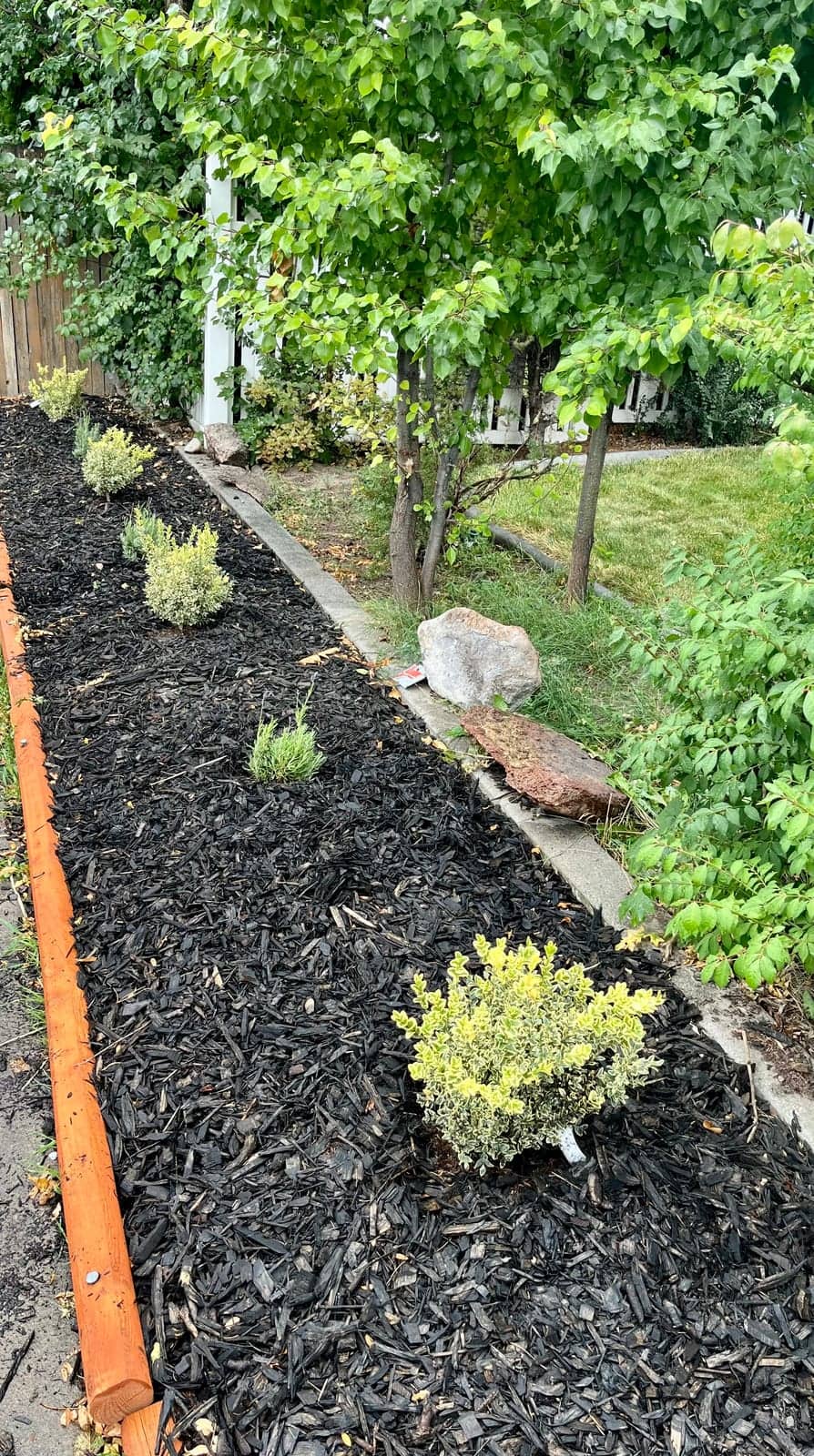
Mulch goes on in a layer, not a mound. It is pulled back a few inches from the stems of plants and from the trunks of trees and shrubs, because mulch piled against bark holds moisture there and invites rot and rodents. The bed in the first photo on this page, with new shrubs and grasses in fresh black mulch behind a wood edge, shows the depth we mean.
Mulch wears down, and beds usually want a top-up every year or two. We check how thick it is when we walk the beds and say when yours is due.
Cutting back, deadheading and dividing
Deadheading, which means taking off flowers once they fade, keeps many perennials and annuals blooming longer, because the plant stops spending energy on seed. Some plants are better left alone at the end of the season, so their seed heads feed birds, and we will tell you which.
Perennials that have outgrown their spot are divided. The clump is lifted, split, and the pieces replanted, which gives you more plants and a healthier clump. The best windows are early spring as growth starts and early fall, when the soil is still warm and the plant has time to root before winter.
Staking, tying up a plant that has flopped and pruning back a shrub that is crowding its neighbours are all part of keeping a bed in shape through the season.
Water, plainly
Most beds do better with a deep soak every few days than with a light sprinkle every day, because deep watering sends roots down where the soil stays cool. How often depends on the plants, the soil and the weather, and on the water you have: city water, canal water or secondary water, each with its own schedule in the town you live in.
A bed that wilts in the afternoon and recovers by morning is usually coping. A bed that is still limp in the morning needs water, or has a deeper problem that is worth looking into.
In the foothill neighbourhoods
In North Logan and Hyde Park, where deer come down from the foothills, a bed can lose its new growth overnight. A bed that is maintained is easier to protect, because we are already looking at it every few weeks, and a plant list that leans toward what deer pass over helps a lot.
While you're away
A bed can go from fine to rough in the weeks you're gone. One client had weeding and watering done while she was away for a month, and her review on this page says it better than we can. If you travel in summer, tell us your dates and what is planted.
A bed we brought back
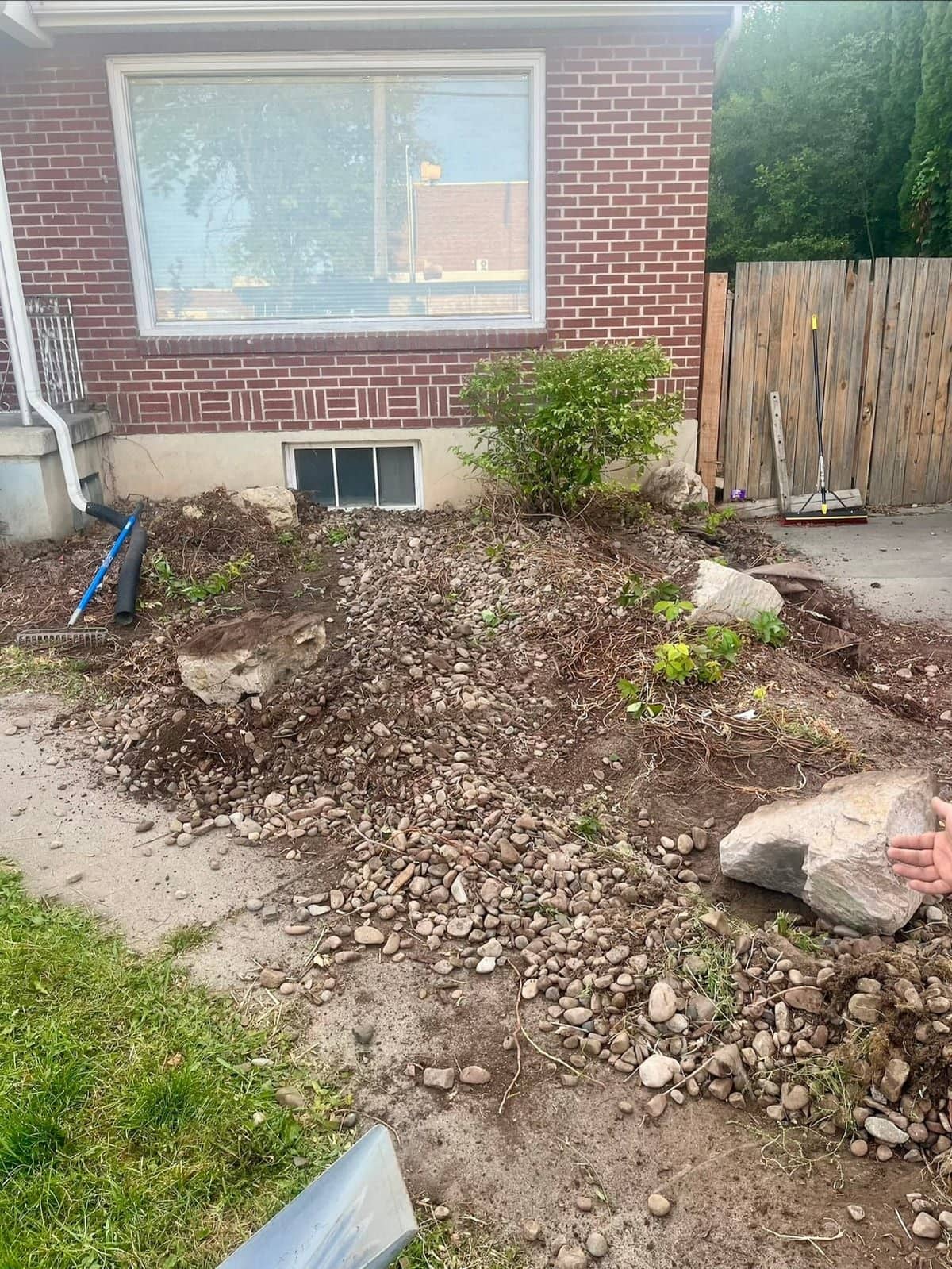
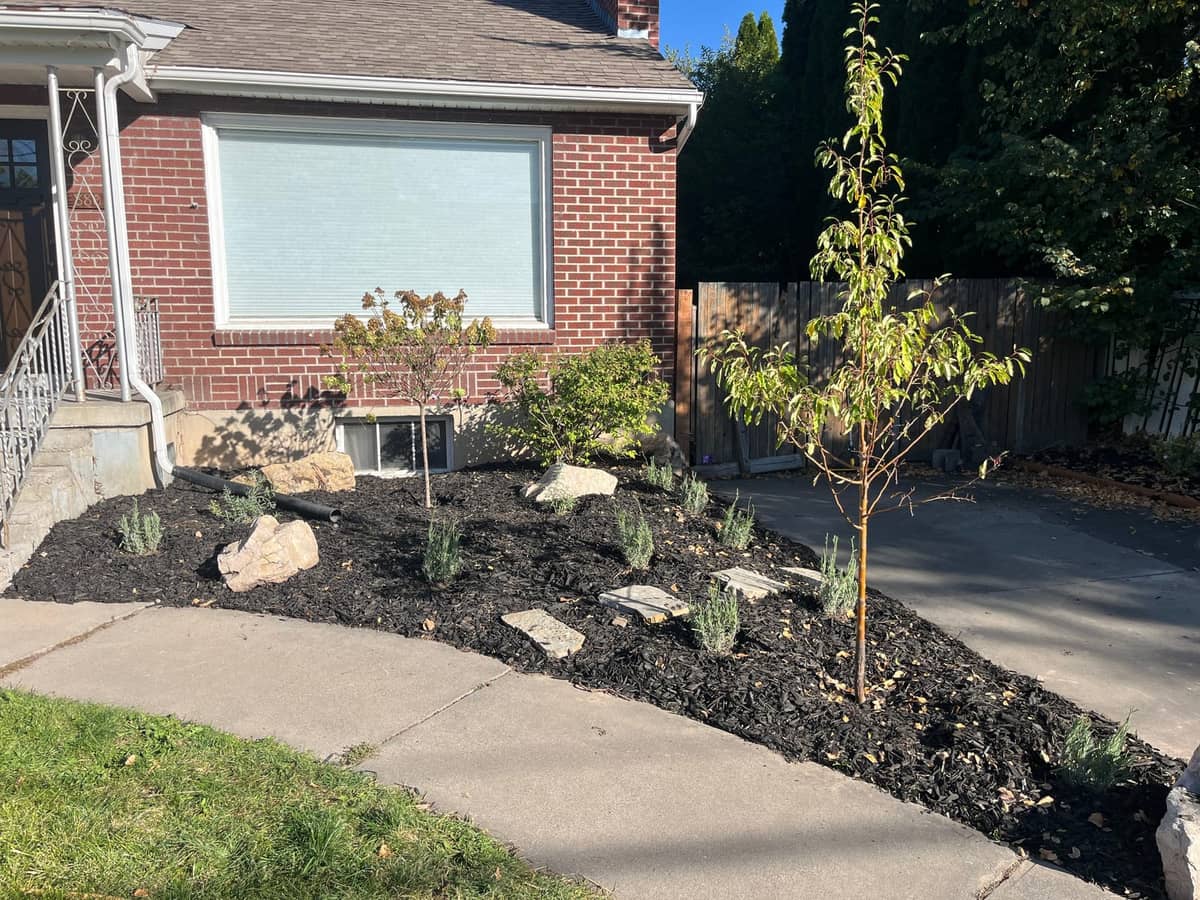
The photos on this page show one of our jobs. A front bed by a brick house had gone over to weeds, loose river rock and old debris. We cleared it down to bare soil, planted young trees and new plants among boulders, and finished it with fresh black mulch.
A bed like that stays in good shape with a little care each season, which is what maintenance is for.
Where we work
We look after garden beds in Logan and the towns around it, from Smithfield and Hyde Park in the north of the valley to Hyrum in the south. Beds often need better soil or new plants too, so these pages go together.
Questions people ask
How often should garden beds be looked after?
It depends on the beds and the time of year. Most need the most attention from late spring through mid-summer. We'll suggest a rhythm once we've seen them.
Can you look after my beds while I'm away?
Yes. Weeding and watering while you're away is part of it; the review on this page is from a client who was gone for a month.
Do you take the weeds and clippings away?
Yes. Everything we pull or cut leaves with us.
How do you deal with bindweed and thistle?
By pulling them every time they show, so the root is starved over a season or two. Tilling spreads them, so a tiller is the wrong tool for a bed that has them.
How deep should mulch be?
About two to three inches over the bed. A thinner layer lets weeds through and dries out fast. A much thicker one can stop water reaching the soil. Keep it a few inches back from tree trunks and plant stems.
Is weed fabric worth using under mulch?
Usually not. Weeds root into the soil that builds up on top of it, and it gets in the way when you want to plant. A good layer of mulch does the job.
When should perennials be divided?
Early spring as growth starts, or early fall while the soil is still warm. Which plants need it, and how often, depends on the plant.
When should I mulch my garden beds?
Spring, once the soil has started to warm, and fall, before the ground freezes, both work. Spring mulch holds moisture in for summer, and a fall layer protects roots over winter. Most beds need a top-up about once a year.
What should I do with my beds before winter?
Pull the last weeds before they set seed, cut back plants that are dead or diseased, water well if the fall has been dry, and add a fresh layer of mulch once the plants have stopped growing.
How much does garden bed maintenance cost?
It depends on the beds, so there is no flat price list. We look at what needs doing and give you a free quote, with a written price before any work starts. Call (435) 232-2638 or send the quote form.
More from RedBud Plant Care
Tell us what your yard needs
Quotes are free and there’s nothing to sign. Send the quote form, or call or text and talk it through.