
Raised garden bed installation in Logan, Utah
RedBud Plant Care builds raised garden beds in Logan, Utah and across Cache Valley, fills them with good soil and compost, and plants them with vegetables, herbs or flowers. Eric, a master gardener, plans the bed around the sun your yard gets, the ground under it and a growing season that runs from mid-May to late September.
What a raised bed job covers
A bed built where it will work
We pick the spot with you for sun and water, then build the bed to a size and height we agree on before we start.
Filled with good soil and compost
The bed is filled with a mix of good soil and compost, so plants start in loose, fertile ground whatever lies under the lawn.
Planted for you
Vegetables, herbs, cutting flowers or a pollinator mix, set out to suit the spot and the season.
Mulched and watered in
A layer of mulch goes on after planting to hold the moisture, and we tell you how often the new plants need water.
Cleaned up after
Packaging, offcuts and spare soil leave with us, and the lawn around the bed is left tidy.
Care afterward, if you want it
Seasonal care and bed maintenance are paid services, and a one-off build is just as welcome.
Who this is for
A raised bed suits a family that wants to grow its own vegetables and has a lawn, a gravelly strip or a patch of packed clay where nothing grows well. It suits a gardener whose knees or back would rather work at waist height, and a new homeowner who wants a garden going this spring without digging up the whole yard first.
It also suits a flower grower who wants a tidy, defined bed for cutting flowers or a pollinator planting. Whether the plan is one bed or a row of them, the questions are the same: where does the sun fall, how will the bed be watered, and what will go in it?
Why raised beds suit Cache Valley
Logan sits at about 4,500 feet, and USU Extension puts its average last spring frost on May 14 and its average first fall frost on September 25. USU counts 158 frost-free days on its campus in Logan, and as few as 113 in Lewiston at the north end of the valley. The soil in a raised bed warms sooner in spring than the ground around it, which gets seeds and starts moving earlier in a short season.
The ground under the lawn varies a good deal from one end of the valley to the other. On the benches at River Heights and Providence it is delta gravel that drains fast and dries out. Out on the flat land toward Nibley it is silty clay that packs tight when wet and sets hard when dry. USU Extension also says Utah soils average a pH of about 8.0, and that lime locks iron away from roots. A bed filled with a loose mix of soil and compost gives vegetables a start that none of those soils can.
Raised beds also drain well, which helps in the clay areas where water sits after a storm or a heavy irrigation turn, and they keep the foot traffic off the soil, so it stays loose from one year to the next.
How a raised bed installation goes
Eric works by appointment, booked with him directly or through the website. Call or text (435) 232-2638, or send the quote form with a note on what you want to grow and a photo of the spot if you have one.
He comes out and walks the yard with you. You look at the sun together, at where the hose reaches, at what the ground is like and at how the bed will sit next to the house, the fence and the lawn. He tells you what he would build and where, and you get a free written price before any work starts. There is nothing to sign.
On the day of the work the bed is built, filled and planted, then mulched, and everything left over goes with us. We clean up after every job.
Where to put a raised bed
Vegetables want about six to eight hours of direct sun in summer. Tomatoes, peppers, squash and beans want the most, while lettuce, spinach and herbs such as parsley and mint put up with a few hours of shade. Watch the spot through a summer day before you commit, because the shadow of a house or a tall tree moves a long way between morning and evening.
Pick ground that is level and close to a hose. A bed that takes a long walk with a watering can gets watered less, and watering is what decides whether a bed does well. Keep it clear of big tree roots, which move into a bed and drink from it, and think about where deer walk. Mule deer come down into the towns at the mountain edge in late November, and they eat what is planted, raised bed or not, so a bed near the foothills may need a fence around it.
Leave room to work. A bed about four feet across lets you reach the middle from either side without stepping into it, and a path wide enough for a wheelbarrow between beds saves a lot of trouble later.
Size and height
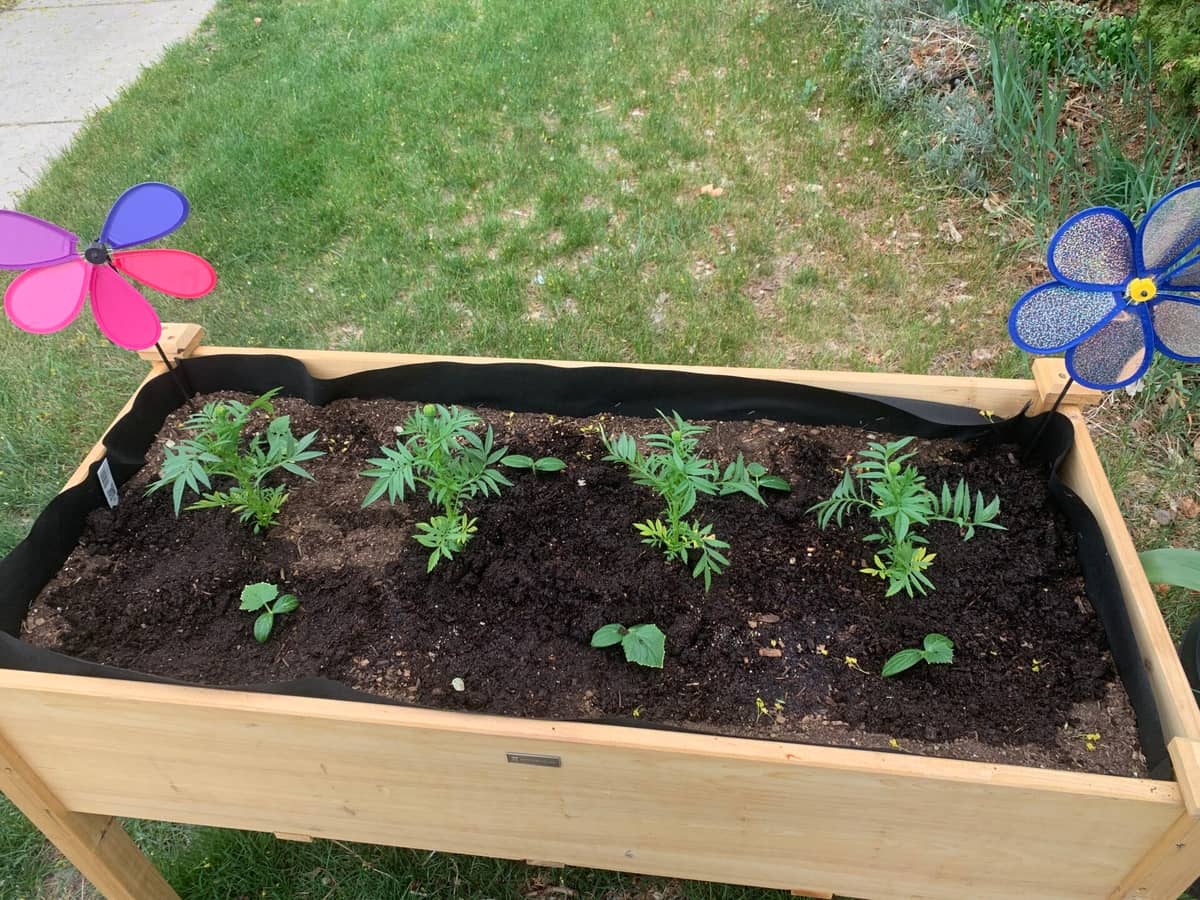
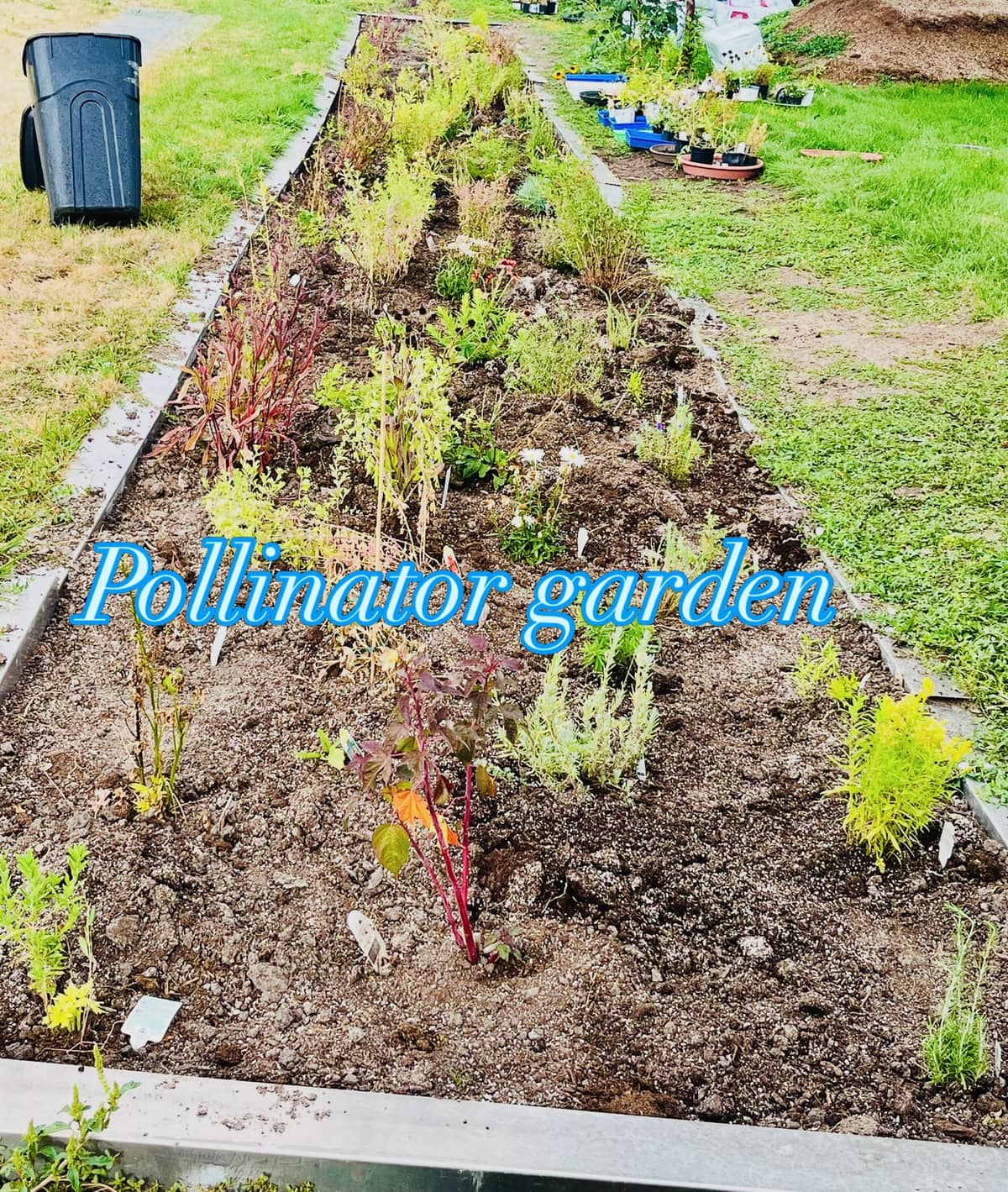
Most vegetables root well in a bed six to twelve inches deep, and carrots, parsnips and other long roots like more. A taller bed puts the soil nearer your hands. The bed in the first photo on this page stands on legs, which puts the planting at working height, and the long pollinator bed in the second photo sits low and runs the length of a lawn.
We agree the length, width and height with you on the visit, because the right answer depends on the yard and on who will be tending the bed. A tall bed is kinder to a back and costs more to fill. A low bed is cheaper to fill and suits a larger planting.
The frame itself can be wood or metal edging, as the photos on this page show. What matters is that it holds the soil in and stays straight for years, and we talk through the options with you.
The soil that goes in
A raised bed is only as good as what fills it. We fill ours with a mix of good soil and compost, not with the native ground from underneath, so the bed starts out loose and fertile and drains well. Compost feeds the plants and holds moisture through a dry July, and it keeps the soil open so roots can run.
The mix settles over the first season as it breaks down and as rain and watering pack it. Expect the level to drop an inch or two, and top it up with compost each spring. A couple of inches of compost forked into the top of the bed each year keeps it fertile, and in a bed that is already planted a thinner layer goes on the surface as mulch.
A bed that is lined with fabric, like the one in the first photo, keeps the soil from washing out through the seams and slows weeds that come up from below. If grass is growing where the bed will stand, it is dealt with first so that it does not come up through the soil.
Water and mulch
Raised beds dry out faster than the ground around them, because the soil is lifted and loose and the sides let the heat in. In a Cache Valley summer that can mean watering every couple of days in July. Water deeply and slowly at the base of the plants, in the morning, and let the top inch dry out between waterings. A hose with a soaker line or a drip line laid across the bed puts the water where the roots are and keeps the leaves dry.
Mulch makes the biggest difference after that. Two to three inches of straw, wood chips or compost over the soil slows its drying, keeps it cooler and blocks the light weeds need. Keep it a few inches back from plant stems. We mulch the bed after planting and tell you how often to water the first few weeks, when the roots are still small.
What to grow, and when
Cool-season crops can go in as soon as the soil can be worked, often in April: peas, lettuce, spinach, radishes and onions. They run out of steam in July heat and often get a second sowing in August for fall.
Tomatoes, peppers, squash, cucumbers and beans wait until the last frost has passed. In Logan that means after the middle of May, and often later in the foothills or on a cold spring. A row cover or a plastic tunnel over the bed buys a few weeks at either end of the season, which counts for a lot when the season is short.
Many people mix flowers into a vegetable bed. Marigolds, nasturtiums and herbs bring pollinators in, and they help vegetables that need a bee, such as squash and cucumbers, set fruit. We can plant a bed with vegetables, a bed with flowers or a mix of both.
Raised beds for flowers and pollinators
A raised bed does not have to hold vegetables. The long bed in the second photo on this page is a pollinator garden: flowering plants set out so that something blooms from spring to the first frost, which keeps bees and other insects fed all season. A raised bed gives a flower planting a clean edge, good drainage and a way to improve the soil without redoing the whole yard.
For cutting flowers we group plants that want the same sun and water, put the tall ones at the back or the middle, and repeat a few plants through the bed so that it looks planned. The plants are chosen to finish their year inside a short season and to put up with alkaline ground.
Looking after a raised bed
A new bed needs the most care in its first month. The roots are small and the soil is still settling, so it needs regular water, a look for weeds every week or so and a replanting of any seedling that failed. After that the work is lighter than a ground-level garden, because the bed is small, the soil is loose and the weeds are easy to pull.
Rotate what you grow from one year to the next, so that tomatoes and their relatives, and the cabbage family, do not sit in the same soil two years running. Pull spent plants in fall, add a layer of compost and mulch, and leave the roots of any perennials alone. Eric does this as part of seasonal care if you would rather not do it yourself.
Where we work
We build and plant raised beds in Logan and the towns around it across Cache Valley. If your yard has an HOA, check its rules on structures and fences before the bed is booked. Good soil under a new planting makes a difference to how it does, so soil work goes well with this job.
Questions people ask
Can you build and plant a raised bed for me?
Yes. We build the bed, fill it with a mix of good soil and compost, and plant it. The first photo on this page is a bed we built and planted.
How tall should a raised bed be?
Six to twelve inches is deep enough for most vegetables, and root crops like more. A taller bed is easier on the back. We agree the height with you on the visit.
How wide should a raised bed be?
About four feet across lets you reach the middle from both sides without stepping into the bed. Length depends on the yard.
What soil goes in a raised bed?
A mix of good soil and compost, rather than the native ground below. Expect it to settle an inch or two in the first season, then top it up with compost each spring.
Can a raised bed go on a lawn?
Yes. The bed in the first photo on this page sits on a lawn. The grass under it is dealt with first so that it doesn't grow up through the soil.
When can I plant a raised bed in Cache Valley?
Peas, lettuce, spinach and radishes can go in as soon as the soil can be worked, often in April. Tomatoes, peppers, squash and beans wait until after the last frost, which usually comes around the middle of May.
How often does a raised bed need watering?
Raised beds dry out faster than ground-level beds, and in July that can mean every couple of days. Water deeply at the base of the plants in the morning, and mulch the bed to hold the moisture.
Will deer eat what grows in a raised bed?
Often, yes. A raised bed does not stop a deer, and a bed near the foothills may need a fence around it.
Can you do one bed, or only a whole garden?
One bed is fine, and so is a row of them. Tell us which you want when you call, and we will quote that.
How much does a raised bed cost?
It depends on the size, the height and what goes in it, so there is no flat price list. We look at the yard and give you a free quote, with a written price before any work starts. Call (435) 232-2638 or send the quote form.
More from RedBud Plant Care
Tell us what your yard needs
Quotes are free and there’s nothing to sign. Send the quote form, or call or text and talk it through.