
Tree trimming and pruning in Logan, Utah
RedBud Plant Care does tree trimming and pruning for trees and shrubs in Logan and across Cache Valley. We cut the way each plant actually grows, so the cuts heal and the tree comes back stronger, and every job ends with the debris hauled away.
What a pruning visit covers
Trees
Structural pruning that shapes a young tree and keeps an older one sound: dead wood, crossing branches and growth heading the wrong way, each cut back to a point the tree can seal over.
Shrubs and hedges
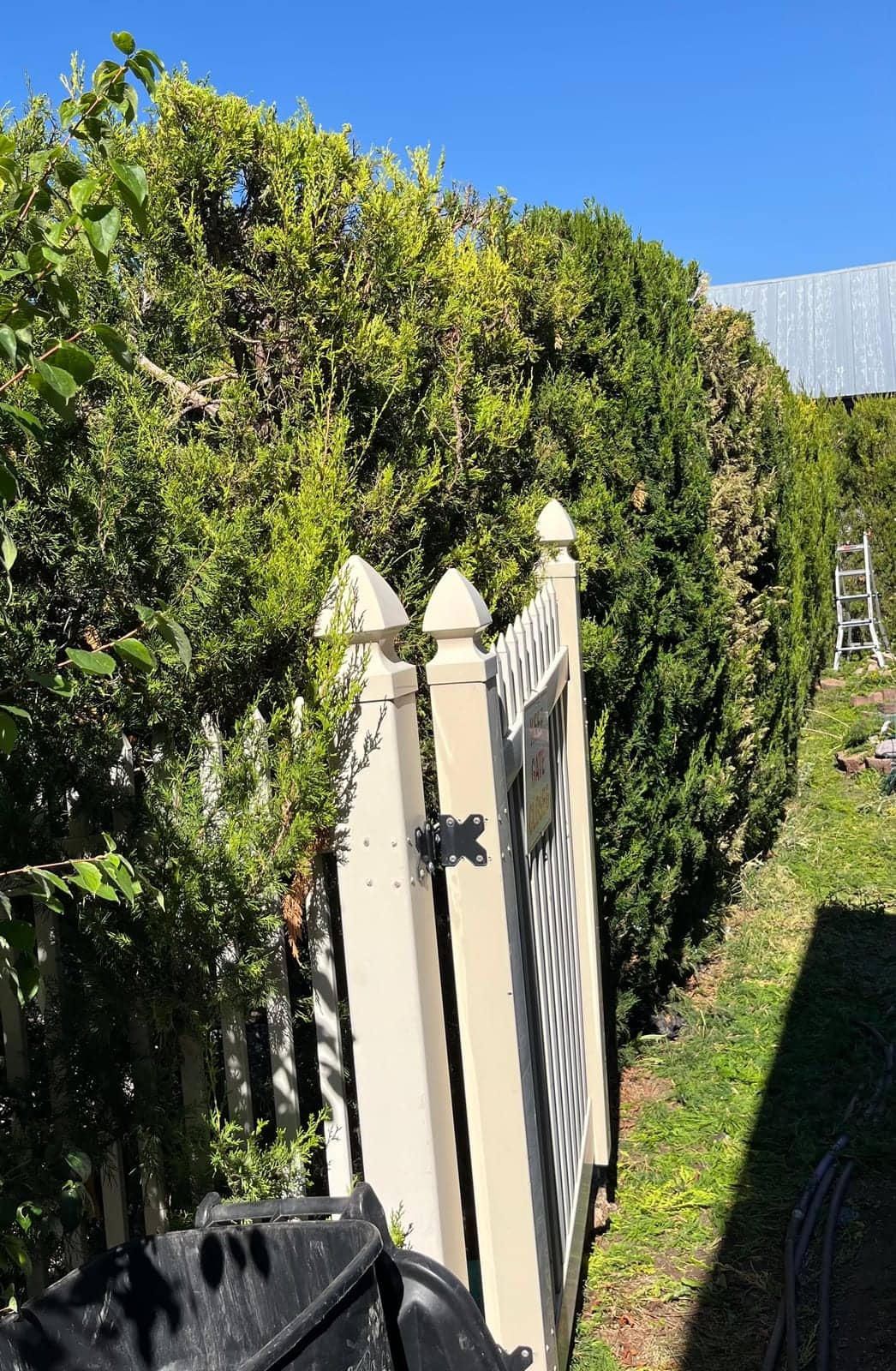
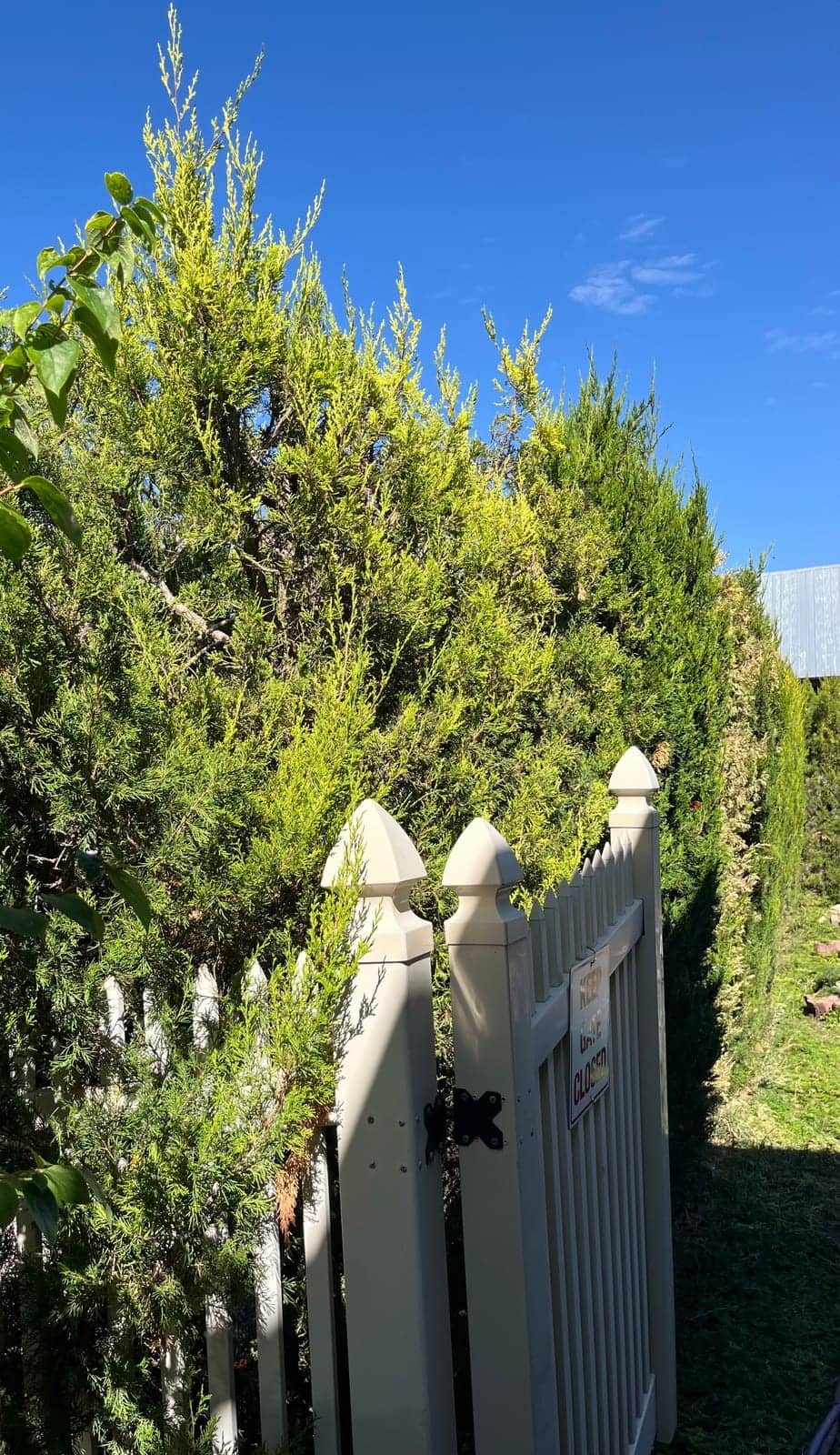
The same selective cuts, branch by branch, so a shrub keeps its natural shape and flowers where it should. Hedges are cut back to a clean line, like the one in the photos on this page.
The right time of year
Each plant is pruned when it should be. Most structural tree work waits for the dormant season; other plants want a different month, and we'll tell you which.
The cleanup
Branches, clippings and debris leave with us when the job is done. You won't be left raking up after the pruning.
Which trees and shrubs we trim
Tree trimming is for any tree or shrub that has gotten away from you: branches crossing over the roof or the fence, shrubs that came with the house and have grown into a tangle of stems, a young tree that needs shaping now so it grows strong. It is also for dead wood that should come out before winter, when snow piles weight on every branch.
Most yards in Logan and the towns around it have the same cast: big shade maples, an ash or two, a crabapple or flowering pear out front, a spruce or pine by the driveway, and a row of shrubs along the house or fence. They all get pruned, and no two of them want the same cuts.
Fast-growing shade trees such as silver maple, box elder and Siberian elm have brittle wood, so limbs that grew too long and too heavy are the ones that let go in a storm. Slower trees like spruce and pine need very little, and mostly need to be left alone. Flowering trees and shrubs are pruned around their bloom. Knowing which kind of plant you have is half of the job, and it is the first thing we sort out when we look at your yard.
If you can't name a tree, that's fine. Describe it when you call or send the quote form, and we'll work it out on the visit.
Why the cut matters
A tree doesn't heal a wound the way skin does. It walls the wound off, sealing over from the collar where a branch meets the trunk. Cut just outside that collar and the wound closes over cleanly. Leave a stub, or cut flush into the trunk, and the wood behind it is open to rot for years. Paint or sealant on the cut isn't needed, and the tree does better without it.
A heavy limb comes off in stages. A first cut a little way out from the trunk takes the weight, and the last cut is made at the collar. That keeps the limb from tearing a strip of bark down the trunk as it falls, which is the kind of wound that never fully closes.
Topping a tree, or shearing a shrub into a ball, removes growth the plant was counting on and forces a flush of weak shoots to replace it. Those shoots are attached shallowly and break easily, and the tree spends years rebuilding what was cut. It looks tidy for a season and costs the plant for many. We take out fewer branches, each in the right place.
Pruning on Cache Valley's calendar
Long, cold winters set the schedule here. Most structural pruning on shade trees is best done while they are dormant and the leaves are off, from leaf drop into late winter. Every branch is visible, the crossing limbs and dead wood stand out, and the tree is ready to close its cuts when it wakes up in spring. Frozen ground is also firm to work on, which is easier on your lawn.
Spring-flowering shrubs are the exception. Lilac, forsythia and their relatives set next year's flower buds soon after they finish blooming, so cut them in winter and you cut off this year's blooms. They wait until just after they flower. Shrubs that bloom on new summer growth can be cut back in late winter.
Fall is the season to hold off. A fresh cut made in October has to face the coldest months while the tree is still part awake. Summer is for light work only: a dead branch, a limb over the sidewalk, a shrub that has outgrown its spot. When we walk your yard we'll tell you what is due now and what should wait a season.
How much comes off in a year
A common guideline is to take no more than about a quarter of a tree's living branches in one season. A tree that has gone years without pruning is brought back over two or three winters, so it never loses so much that it answers with a thicket of water sprouts. Young trees get a lighter touch more often, because shaping a tree while it is small avoids big cuts later.
Mature trees in good health usually want pruning every few years, and not every year. We'll give you our read on each tree during the visit, including the ones that don't need us yet.
Shrubs and hedges
The photos on this page are a hedge job: an evergreen hedge spilling over a white picket gate, trimmed back to a clean, even line. Hedges are cut slightly wider at the base than at the top. That lets light reach the lower branches, which keeps the bottom of the hedge green and full.
For other shrubs we cut branch by branch. On an older lilac or a similar shrub, the oldest and thickest stems are taken out at the base over a few years, which brings in younger growth and more flowers. Shearing everything to one height is quick and leaves a shrub that is leafy on the outside and bare inside.
A damaged limb: what to do first
Cache Valley's heavy, wet early snow is hard on trees that still have their leaves, and wind does the rest. If a limb has come down or is hanging, stay out from under it. Don't climb a ladder to cut a hanging limb, and don't pull on one that is tangled in the tree. A hanging branch can drop without warning, and a bent limb is under tension that can throw a saw.
Take photos before anything is moved. If a tree has damaged your roof, fence or car, your insurance company will want to see how it looked, so ask them what they need before the cleanup starts. RedBud doesn't take storm or emergency jobs, because Eric works by appointment, so for a tree that is an immediate danger call an emergency tree service. For a damaged tree that can wait for a visit, call about your next job or send the quote form, say which tree it is and what it is touching, and we'll book a time to look at it and give you a written price.
If a branch is touching or leaning on a power line, stay well away from it and call your electric company, whose number is on your bill. Wires near a tree are never a homeowner job, and branches that crowd a line belong to the utility or a line-clearance crew. If a tree of yours is growing toward a line, mention it when you call.
What a visit looks like
Call or text, or send the quote form with a note on what you'd like done. We come out, walk the yard with you and look at each tree and shrub. You hear what needs doing now, what can wait, and whether any tree would be better off removed.
You get a free written quote and a price before any work starts, with nothing to sign. When the work is booked it is done at the right time of year for each plant, and when it is finished the branches and clippings leave with us.
When pruning isn't enough
A tree that leafs out thinly or not at all, drops bark, or leans further every year has usually gone past what pruning can fix. We'll tell you straight if that is what we see, and what it would take to take the tree down.
Where we work
We trim and prune trees and shrubs in Logan and the towns around it across Cache Valley.
Questions people ask
Is tree trimming the same as tree pruning?
People use the two words for the same job, and so do we. What matters is how the cuts are made: selective cuts, each in the right place.
Do you trim shrubs as well as trees?
Yes. Trees and shrubs are one service. Shrubs get the same selective cuts as trees, so they keep their natural shape, and hedges are cut back to a clean line.
What is the best time of year to trim trees in Cache Valley?
For most shade trees, the dormant season from leaf drop into late winter. Spring-flowering shrubs wait until just after they bloom. Fall pruning is best avoided, and summer is for light work.
Is topping a tree ever a good idea?
Almost never. Topping leaves large wounds and makes the tree grow a crop of weak shoots that break easily. A tree that is too tall for its spot is better thinned, or replaced with one that fits.
How much of a tree can be cut in one year?
About a quarter of the living branches is a common limit. Overgrown trees are brought back over two or three winters.
A limb came down in a storm. What should I do first?
Stay clear of anything hanging, take photos of the damage, and keep away from any branch touching a power line. Call your electric company if wires are involved. RedBud doesn't take storm or emergency jobs, so a limb that is an immediate danger needs an emergency tree service. Once things are safe, call about your next job and say which tree it is and what it is resting on. Eric works by appointment and will book a time to look at it and give you a written quote.
Do you prune fruit trees?
Yes, in the spring, before the buds open.
What a spring fruit tree pruning coversDo you take trees down too?
Yes, when a tree has to come out. We'll also tell you if a good pruning could save it instead.
How tree removal worksHow much does tree trimming cost?
It depends on the trees, so there is no flat price list. We look at what needs doing and give you a free quote, with a written price before any work starts. Call (435) 232-2638 or send the quote form.
Do you clean up afterwards?
Yes. Everything we cut leaves with us. The review on this page says it better than we can: you couldn't tell we'd been there.
More from RedBud Plant Care
Tell us what your yard needs
Quotes are free and there’s nothing to sign. Send the quote form, or call or text and talk it through.