
Tree and garden care in Nibley, Utah
RedBud Plant Care looks after yards in Nibley, on the flat valley floor south of Logan. Eric, a master gardener, prunes trees and shrubs, plans and plants gardens, improves soil, keeps beds tidy, clears yards each season and removes trees that have to go. The work here starts with water: where it sits, and where it comes from.
What shapes a Nibley yard
These are facts about Nibley from the city, the federal soil survey and USU, and what each one means for a tree, a bed or a garden.
Groundwater sits close to the surface
The city maps water table depth, requires every floor to sit at least a foot above the groundwater, and requires a sump pump or similar system before a home can be occupied. For a yard, shallow water means roots drown in heavy soil, so tree and shrub choice matters more here than almost anywhere in the valley.
Sump pumps drain to the street
The city asks that sump pump water go to the street gutter, because water dumped in a yard can circle back to your house or a neighbor's. Plan beds and tree wells so that pump water never runs across them.
Three kinds of flooding
The city names river overflow, surface water and groundwater as its flood types. Surface water is worst on the flat ground west of Highway 165. Raised beds and grade changes help a garden there, and young trees do better on a gentle mound.
Canal companies, not the city
Private companies run the canals and secondary water in Nibley, and the city posts a map showing which one serves each area. The turn-on date and the flow come from your company, so time new plantings to the water you can count on.
A soil series named for the town
The federal soil survey names a Nibley series: deep, somewhat poorly drained silty clay loam on old lake terraces, in a climate of about 15 inches of precipitation. Silty clay holds water and packs down, so loosening and adding compost pay off.
A city tree plan with two lists
Nibley's tree care plan for public strips favors trees that handle alkaline soil and dry spells. It gives one list for planting under power lines and one for planting where there are none, and it leaves off trees whose roots lift sidewalks.
No turf in new park strips
Nibley's planning commission reviewed landscaping rules in 2023 that keep turf out of park strips and out of any planting area under 8 feet wide in new developments. Ask the city whether they cover your street. On a newer street, expect a strip of shrubs, groundcover or stone, plus trees.
Choosing plants for ground that stays wet
Roots need air as much as they need water. In a yard where the water table rises in spring and after heavy irrigation, a tree planted deep in silty clay can sit in a bowl of mud. The first rule is to plant a little high. Set the root flare at or just above the soil line, and make a low mound around the trunk so water drains away.
Pick plants for the wet end of the range. Willows, red twig dogwood and many sedges and rushes take wet feet. Spruce, junipers and lavender do not, and they sulk in heavy silty soil. A planting plan for a Nibley yard starts with a walk after a storm or a big irrigation turn, to see which corners hold water and for how long.
Working compost into Nibley's silty clay
The silty clay loam that the soil survey describes for Nibley has fine particles that pack tight when wet and set hard when dry. Water moves through it slowly. That is why a bed can be soggy for days after a storm and cracked by August.
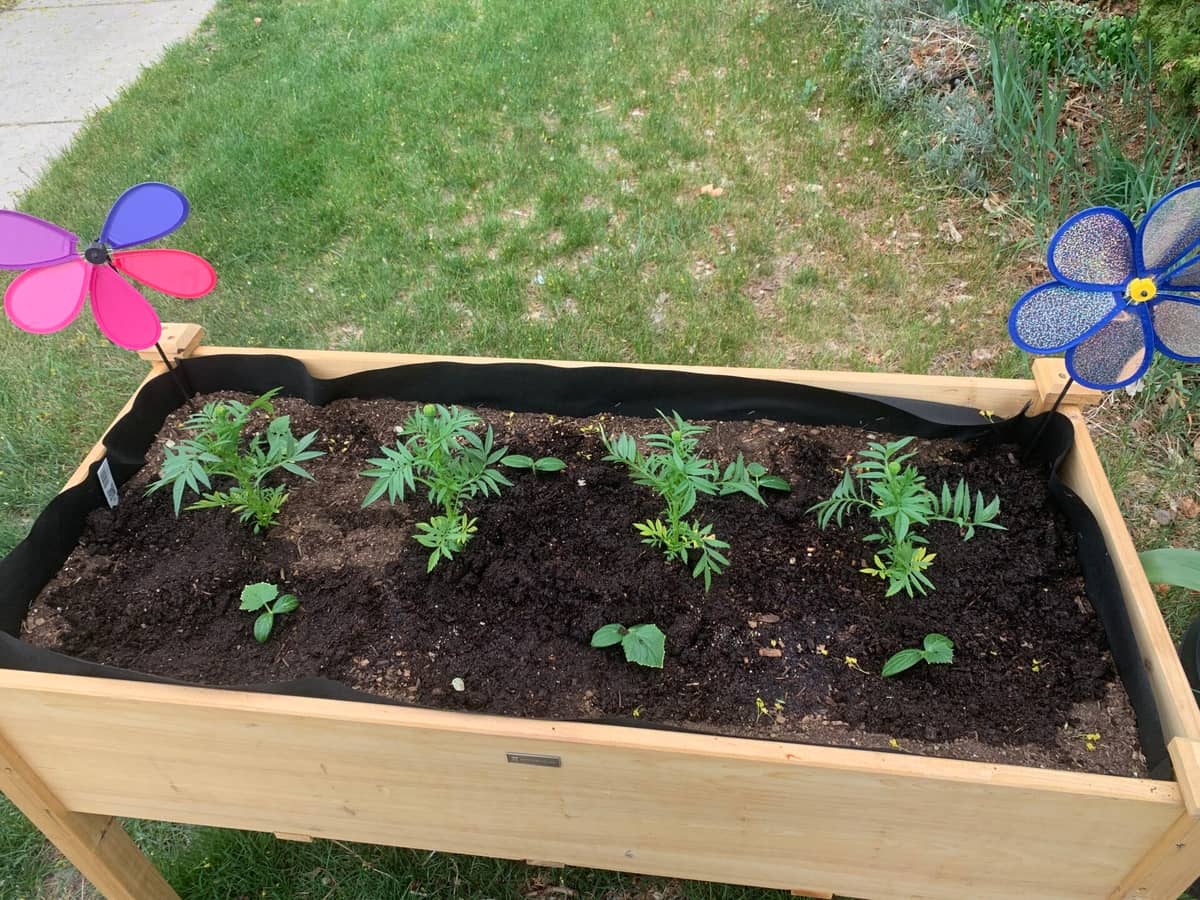
Compost is the fix, worked into the top foot of a bed and spread as a layer on top each year. It opens the soil so air and water move, and it feeds the worms that keep it open. Sand does the opposite of what people hope in clay, so leave it out. Raised beds about a foot tall also help, since the roots sit above the wettest layer and the soil warms earlier in spring.
Alkaline soil here can also leave plants short of iron. Yellow leaves with green veins are the sign, and good organic matter helps more than a quick spray.
Trees on newer streets and along the park strip
A census-based housing summary puts the middle Nibley home at about 2007, and most homes went up in the 2000s and 2010s. That means many yards have trees that are 10 to 20 years old and still being shaped. This is the best time to prune for structure: remove crossing branches, pick one strong leader and raise the lowest limbs over time.
Many new streets have a park strip tree chosen by the developer. Check with the city before you remove or replace one, since public strips follow the city's tree plan. Mind the power lines too. The plan splits its trees into two lists for exactly this reason, so a tall tree under a line is a poor match from the start.
When a tree is dead, leaning or damaged past saving, we do remove trees. We look at the lean, the roots and the wires first.
Water, runoff and the Blacksmith Fork
The city's stormwater plan says most Nibley runoff drains to the Blacksmith Fork River or to the Hyrum Slough, and that some detention ponds do not drain well. It also notes that new homes add runoff where fields used to soak it up. A yard here can get water from your own roof, a neighbor's slope and the street.
Walk your lot in a rain and note where water runs and where it pools. Keep downspouts pointed away from foundations and out of beds. Leave shallow swales open and do not pile bark or leaves in them, since a clogged swale floods the bed beside it. Finally, ask your canal company for its schedule each spring, and plan new beds around when the water runs. Check the city's current page for any change to canal contacts.
A habitat-minded town and the Nibley calendar
In 2016 the National Wildlife Federation named Nibley the first Community Wildlife Habitat in Utah. Its volunteers had registered 87 homes, and Hollow Road, which runs beside the Blacksmith Fork, had more than 20. If you want birds and pollinators, a bed of native and long-blooming plants fits right in. Leave some seed heads standing through winter.
Timing follows the valley. USU Extension lists an average last spring frost of May 15 and a first fall frost of October 1 for Cache County, and says low spots where cold air settles have shorter seasons. A flat Nibley yard may be on the cold side. Prune fruit and shade trees in late winter, plant tender things after mid-May, and rake and cut back in October. Heavy wet snow can also load branches, so check old trees before winter.
Questions people ask
Why do my trees die after a few years in Nibley?
Often it is the water table. Silty clay holds water, and a tree set too deep can rot at the roots. Plant it with the flare at or above the soil line on a low mound, and choose species that tolerate wet feet. Eric looks at drainage before he picks anything.
Where should my sump pump water go?
The city asks that it drain to the street gutter, since water pumped into a yard can come back to your house or your neighbor's. Keep the discharge away from beds and tree wells. For code details, call the city office or check its building page.
Can I plant a park strip tree myself?
Nibley has a tree care plan for public strips that lists suitable trees and separate choices for spots under power lines. Call the city before you plant or remove one. Eric can then help you pick a tree and set it correctly in the strip.
Who runs the irrigation water on my street?
Private canal companies do, and the city posts a map of which company serves which area. The city does not run a secondary system. Ask your company for its start date, then time new planting around it.
Is Nibley soil good for a vegetable garden?
It can be, with work. The federal soil survey describes deep silty clay loam here that packs tight and drains slowly. Raised beds filled with compost and topsoil warm earlier and drain better, and the frost date of mid-May still applies.
Do you work in Nibley?
Yes. Quotes are free. Call or text (435) 232-2638, or send the quote form, and Eric comes out to walk the yard with you. Bring up the wet corners; they decide most of the plan.
What RedBud does in Nibley
Tell us what your yard needs
Quotes are free and there’s nothing to sign. Send the quote form, or call or text and talk it through.